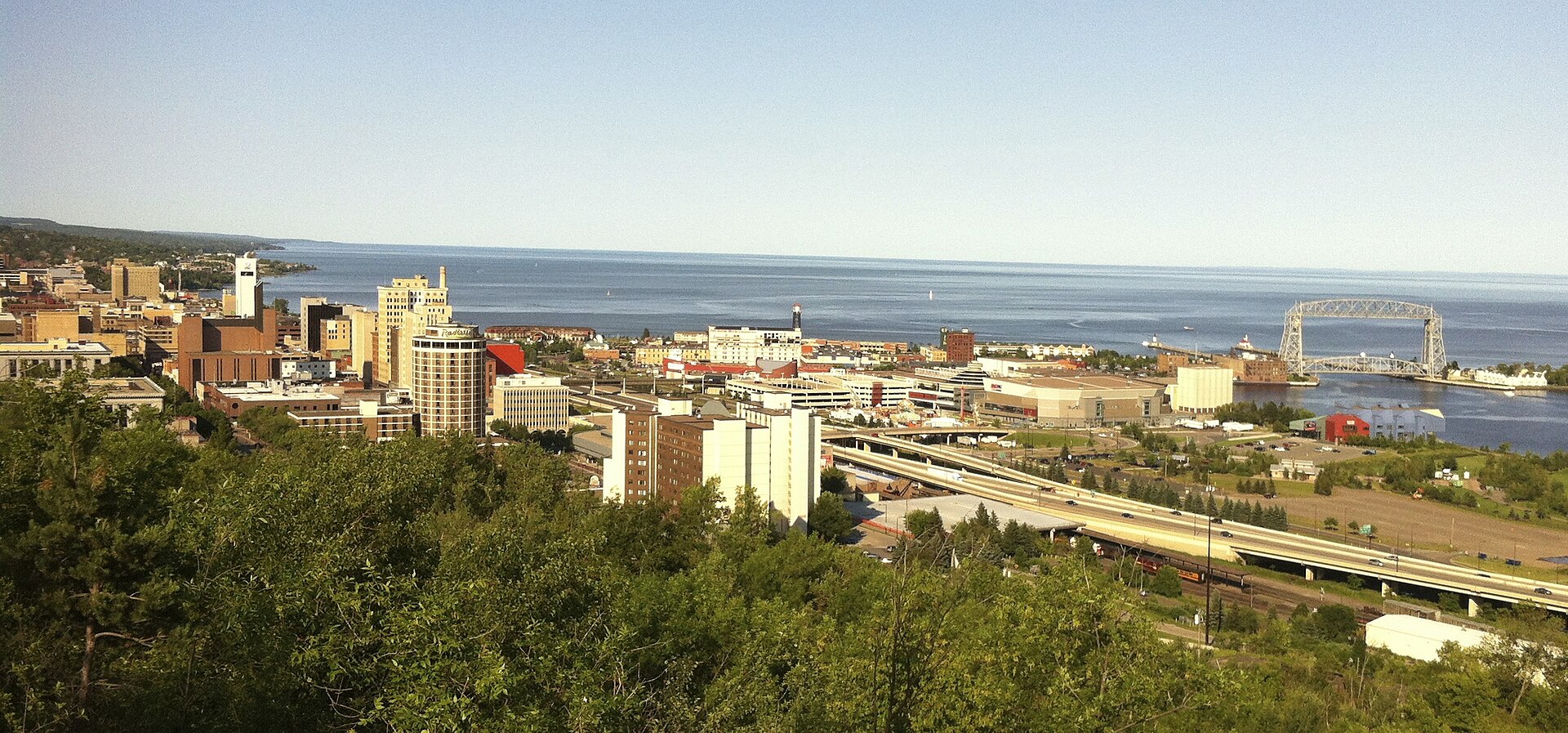
Most people moving to Duluth land in one of about five places. That is not a rule and it is certainly not advice about where anyone belongs; it is a description of what people search for and why. The pattern is easy to explain, and the interesting part is what people say afterwards about what they would weigh differently.
The east side: Lakeside and Lester Park
Median around $303,000. This is where the largest share of arriving households ends up, and the reasons are entirely legible. Lester Park Elementary sits inside the neighborhood, Duluth East High School is at the edge of it, the Lakewalk runs below, Lester Park's nine-plus miles of trail are minutes east, and there is a genuinely walkable block of shops on East Superior Street.
It is also priced at roughly the citywide median, which means it does not require an unusual income to reach. That combination, ordinary price plus east-side schools and parks, is why it absorbs so many people.
The thing people learn later: there is no grocery store, and this is the snowy end of a snowy city. Lake-effect bands favor this shoreline.
The east side, expensive version: Congdon Park
Median around $645,000. People who arrive with equity from a larger metro often go straight here, and it is genuinely one of the most beautiful intact early-twentieth-century neighborhoods in the Midwest: the Tischer Creek gorge with its stone bridges running through the middle of it, a nearly complete 1905 to 1935 architectural collection, and Congdon Park Elementary.
The thing people learn later: the houses are large, old and expensive to heat, and the maintenance is a standing commitment rather than a phase.
New construction: Hermantown and Esko
Hermantown around $314,000, Esko around $425,500. The people who want a house built this century, a level yard, an attached garage and a short run to the airport and Miller Hill go here, and both are separate school districts with strong local followings.
The thing people learn later: walkability is close to zero, and the lake becomes something you drive to rather than something you live beside. Several households tell us they moved to the region for Lake Superior and then bought twenty minutes from it.
Price-driven: Lincoln Park and Superior
Lincoln Park around $165,000, Superior citywide around $200,000. Buyers whose binding constraint is price concentrate here, and both have a real case beyond cost. Lincoln Park has the strongest appreciation story in the city thanks to the Craft District. Superior is across the state line with a lower sales tax rate, flat ground, and roughly $100,000 off the Duluth median.
The thing people learn later: Lincoln Park is changing unevenly, so the block matters more than the neighborhood. And moving to Superior means a different state's tax treatment and school system, which is worth modeling rather than assuming.
The quiet middle: Woodland, Kenwood, Duluth Heights, Piedmont
Roughly $300,000 to $450,000. Above the hill, near the universities and Miller Hill, conventional housing, easier grades than the shoreline neighborhoods, and less competition than the east side. This is where people land when they have been here a year and know what they actually want.
What people say they would weigh differently
Four themes come up again and again.
1. They chose in summer. Duluth in July is one of the most appealing places in the country, and it is a poor guide to Duluth in February. The single most common regret is a house picked on a summer visit whose commute climbs a hillside avenue that is typically plowed after the main routes. If your timeline allows renting through one winter, do it. It is the cheapest insurance available.
2. They underestimated heating. An older house here is a beautiful thing and an ongoing utility bill. Buyers coming from warmer states consistently underestimate this. Ask for two or three full seasons of actual utility history for the specific address rather than accepting an average.
3. They assumed a school assignment. Attendance boundaries change and several Duluth edges are genuinely ambiguous on published maps: Duluth Heights straddles both a middle and a high school boundary, Park Point's elementary is unclear, and Bayview Heights carries a Duluth address with a Proctor assignment. Listing sheets and search-portal school tags get these wrong routinely. Call the district.
4. They bought the view instead of the slope. Duluth sells itself on the lake, and the lake is best seen from a hillside. The same slope that gives you the view gives you the driveway, the ice, and the climb home. Some households would make that trade again immediately. Others would take the flat street and a partial view. Know which one you are before you fall in love with a listing photo.
The advice we actually give
Rent for a season if you can. Drive your proposed commute uphill in winter conditions. Get the heating history. Confirm the school assignment by phone.
And then a broader point. The neighborhoods people arrive in are not the neighborhoods people stay in. A large share of second purchases in this region move to the quiet middle: Woodland, Kenwood, Piedmont, Duluth Heights, or across to Proctor and Bayview Heights. Not because the east side disappointed them, but because after a winter or two, most people re-weight the list. Grade, heating, and how far it actually is to a grocery store climb up it. The view stays on the list, but it moves.
Whatever you land on, it is a small enough city that no choice is permanent and everything is fifteen minutes from everything else. That is worth remembering while you agonize over it.
For the head-to-head numbers behind the choices in this piece, see East Duluth vs West Duluth, Congdon Park vs Lakeside, Hermantown vs Proctor and Woodland vs Kenwood, the quiet middle where a lot of second purchases land.