Duluth Heights, Minnesota
Duluth's most convenient address, wrapped around the shopping.
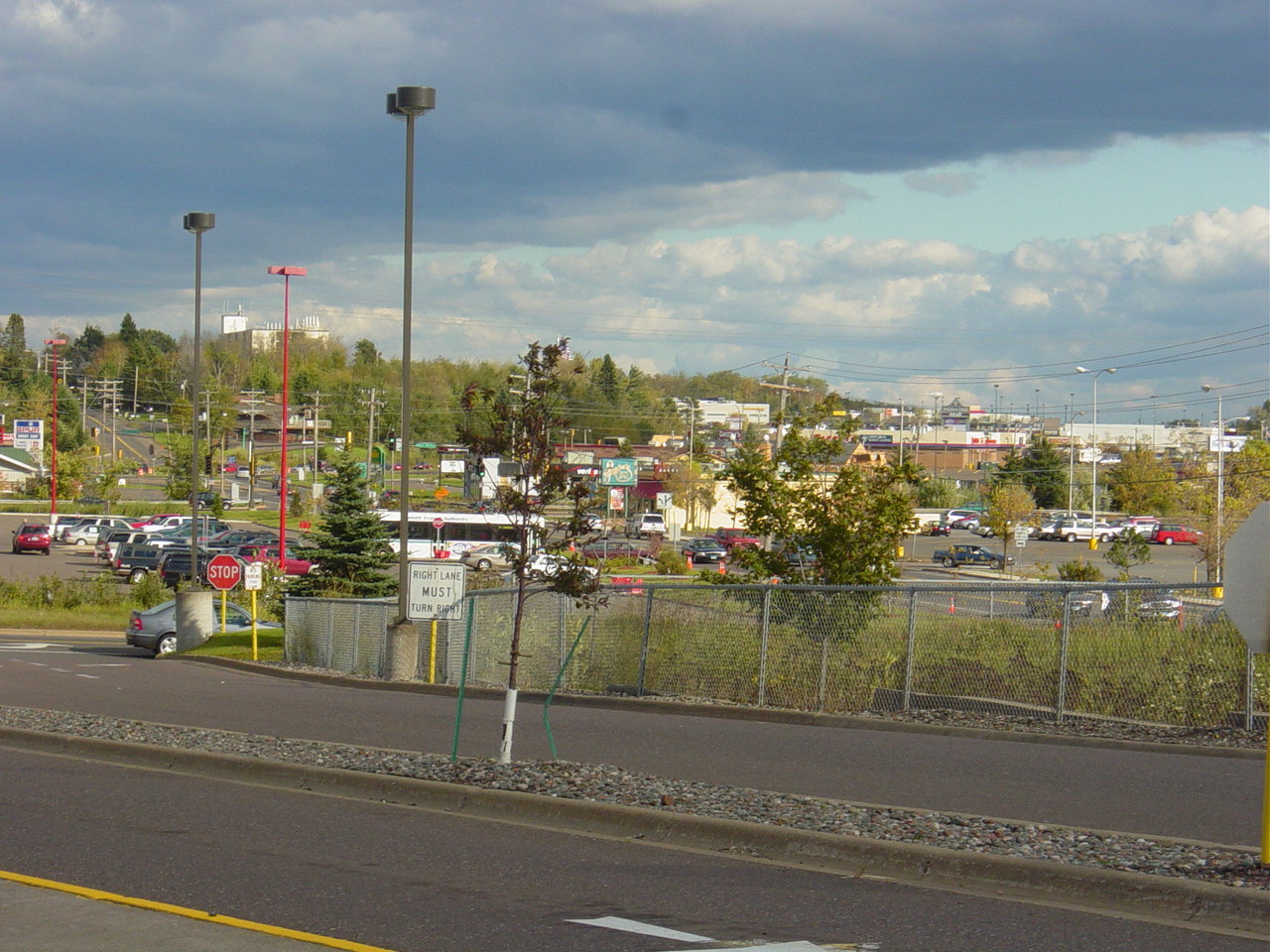
Duluth Heights is the city's practical corner: level ground above the hill, postwar and newer housing, and the entire Miller Hill retail corridor within about half a mile. It has no lake view, no historic architecture, and the busiest traffic in this guide. What it has instead is the shortest errand run, the shortest airport trip, and the easiest winter driving of any neighborhood in Duluth.
Everything about Duluth Heights
Each part of the Duluth Heights guide has its own page. Start anywhere.
Duluth Heights wraps around the Miller Hill retail corridor on the plateau north of downtown, bounded roughly by Central Entrance and Miller Trunk Highway, with Duluth International Airport to the northwest and Kenwood to the east. It is the least scenic and most useful neighborhood in this guide, and residents choose it knowing exactly that.
HistoryDuluth Heights is a postwar neighborhood in a nineteenth-century city, and that dates it precisely. The plateau above the hill stayed largely undeveloped through the era when Duluth grew along the streetcar lines and the industrial waterfront, because it was too far from both to be practical.
CharacterDuluth Heights does not have the kind of character that photographs well, and it would be dishonest to pretend otherwise. There is no historic streetscape, no creek gorge, no lake view, and no walkable main street with a coffee shop on it. What there is instead is a well-functioning, unglamorous, comfortable place to live.
Who lives hereDuluth Heights draws households that prioritize function. The most visible groups are families with children, drawn by level ground, newer housing, and the shortest errand run in the city; retirees and downsizers, for whom single-level ramblers, townhomes, and proximity to medical offices are a genuine combination; and working households employed in the retail, medical, and ...
HousingDuluth Heights has the newest and most conventional housing stock in this guide. The bulk runs from about 1945 to 2010: postwar ramblers and split-levels on the established streets, 1970s two-stories, and later contemporary infill, townhomes, and condominiums on parcels developed more recently.
SchoolsThis is the most important section on this page, and the honest answer is that Duluth Heights does not have a settled school assignment at the neighborhood level.
Parks & recreationDuluth Heights is the weakest neighborhood in this guide for outdoor access, and buyers should price that in honestly. There is no park inside the neighborhood of any significance, no creek gorge, no lake, and no trailhead at the end of the street. What there is, is proximity to other people's parks.
Restaurants & diningDuluth Heights has more restaurants within walking distance than any neighborhood in this guide, and almost none of them are independent. The Miller Hill corridor carries the region's concentration of chain dining, and that is the honest description: convenient, familiar, and not why anyone visits Duluth.
Churches & worshipDuluth Heights has the best all-round access in this guide, and it is not close. The Miller Hill corridor is essentially at the doorstep, about two minutes. Duluth International Airport is six. Downtown is ten. Superior is eighteen. Central Entrance, Miller Trunk Highway, Arrowhead Road, and Haines Road all feed the neighborhood, connecting north toward ...
Safety & feelDuluth Heights reads as two different environments. The arterials and retail corridor are busy, well lit, and heavily trafficked at most hours. The residential pockets behind them are quiet, level, and low-traffic, with better lighting and more consistent sidewalks than the older hillside neighborhoods.
Daily lifeThis is the section that sells Duluth Heights, and the pitch is simple: everything is here.
Local loreDuluth Heights is where the rest of northeastern Minnesota comes to shop. Miller Hill draws from the Iron Range and the North Shore, not just from the city. The neighborhood is essentially flat, which in Duluth is close to a novelty and is the single most-cited reason people move here from the hillside districts. Miller ...
Is it right for you?You will love Duluth Heights if you want your life to be easy. This is the address where the grocery store, the pharmacy, the hardware store, the mall, and the doctor are all within half a mile, the airport is six minutes, and the ground is flat enough that a Duluth winter stops being a ...
How Duluth Heights scores
Is Duluth Heights right for you?
You'll love it if
- The most convenient location in Duluth: grocery, pharmacy, hardware, big-box, the mall, and medical offices within about half a mile.
- Six minutes to the airport and ten to downtown, the shortest combined access in this guide.
- Level ground and newer construction, which makes winter the easiest of any neighborhood here.
- More recent housing and more townhome and condo stock than the historic districts, so less deferred maintenance.
- Ten minutes downhill to the Lincoln Park Craft District and a short drive to both the Piedmont and Hartley trail networks.
Look elsewhere if
- No lake views, no frontage, and the least scenic setting of any neighborhood in this guide.
- Traffic and retail noise. Central Entrance and Miller Trunk are busy arterials, and aircraft are audible on the airport side.
- School attendance is genuinely unresolved here: the Heights straddles both the middle school and high school boundaries, so the assignment must be confirmed by address.
- No neighborhood-level price data was obtainable, which makes pricing harder than in the other neighborhoods covered here.
- Character is thin. This is a practical neighborhood rather than a distinctive one.
If you like Duluth Heights, also look at
East along the plateau, similar practicality with a smaller, walkable shopping center instead of the mall.
PiedmontSouthwest down the hillside, harbor views and the city's most technical trail network.
Lincoln ParkSouth downhill, the Craft District and the city's most affordable housing.
WoodlandEast across the plateau, with Hartley Park inside it and older housing.
DenfeldSouthwest in West Duluth, more single-family stock at lower prices.
HermantownNorthwest beyond the airport, the region's strongest new-construction market in a different school district.
Duluth Heights head to head
Common questions about Duluth Heights
How much do homes cost in Duluth Heights?
This is the one neighborhood in this guide where no reliable neighborhood-level median was obtained. Redfin maintains a Duluth Heights page and showed 10 homes sold in the month accessed 2026-08-13, but did not publish a median. The citywide median was about $310,000 at $187 per square foot, and the Heights' postwar and newer stock generally trades near or a little below that. Confirm with a current Redfin Data Center or Lake Superior Area REALTORS pull before relying on any figure.
What schools serve Duluth Heights?
This is the neighborhood's most important open question. Duluth Heights sits near the boundary between the district's two middle schools and its two high schools, so an address here may feed Lincoln Park Middle and Denfeld, or Ordean East and Duluth East. Do not rely on any neighborhood-level statement, including this one. Use the ISD 709 school locator or call the district with your specific address.
Is Duluth Heights convenient?
It is the most convenient address in the city. Grocery, pharmacy, hardware, big-box retail, the regional mall, and medical offices are all within about half a mile, the airport is six minutes, and downtown is ten. No other neighborhood in this guide comes close on errands.
Is there aircraft noise in Duluth Heights?
On the northwestern blocks nearest Duluth International, yes. The effect varies considerably across the neighborhood, so stand on the specific street at a time when planes are operating before you buy.
Does Duluth Heights have lake views?
No. It sits on the plateau behind the crest of the hill, and it is the least scenic neighborhood in this guide. What it trades for that is the shortest errand run and the easiest winter driving in the city.
How is winter in Duluth Heights?
Easier than almost anywhere else in Duluth. Duluth averages about 90 inches a season on the 1991 to 2020 normals (NWS Duluth) and the plateau holds snow longer than the lake-moderated shoreline, but the ground here is level, so there are no hills to climb or ice over and the arterials are cleared early because of the retail traffic.
Know Duluth Heights well?
Live here, grew up here, or just know it better than we do? Tell us what we're missing, a place we should cover, or something we got wrong.
Where these facts come from
- Redfin, Duluth Heights neighborhood page (activity data; no median published in the data accessed) accessed 2026-08-13
- Redfin, Duluth MN housing market (citywide median and price per sqft) accessed 2026-08-13
- COGGS, Duluth Traverse and trails accessed 2026-08-13
- City of Duluth, Hartley Park accessed 2026-08-13
- NCES Common Core of Data, Denfeld High School (271104000460) and Ordean East Middle School (271104000489) accessed 2026-08-13
- NWS Duluth, seasonal snowfall records and normals accessed 2026-08-13
- Duluth Police Department 2025 Annual Report accessed 2026-08-13
Last reviewed 2026-08-13 by Guide editorial.