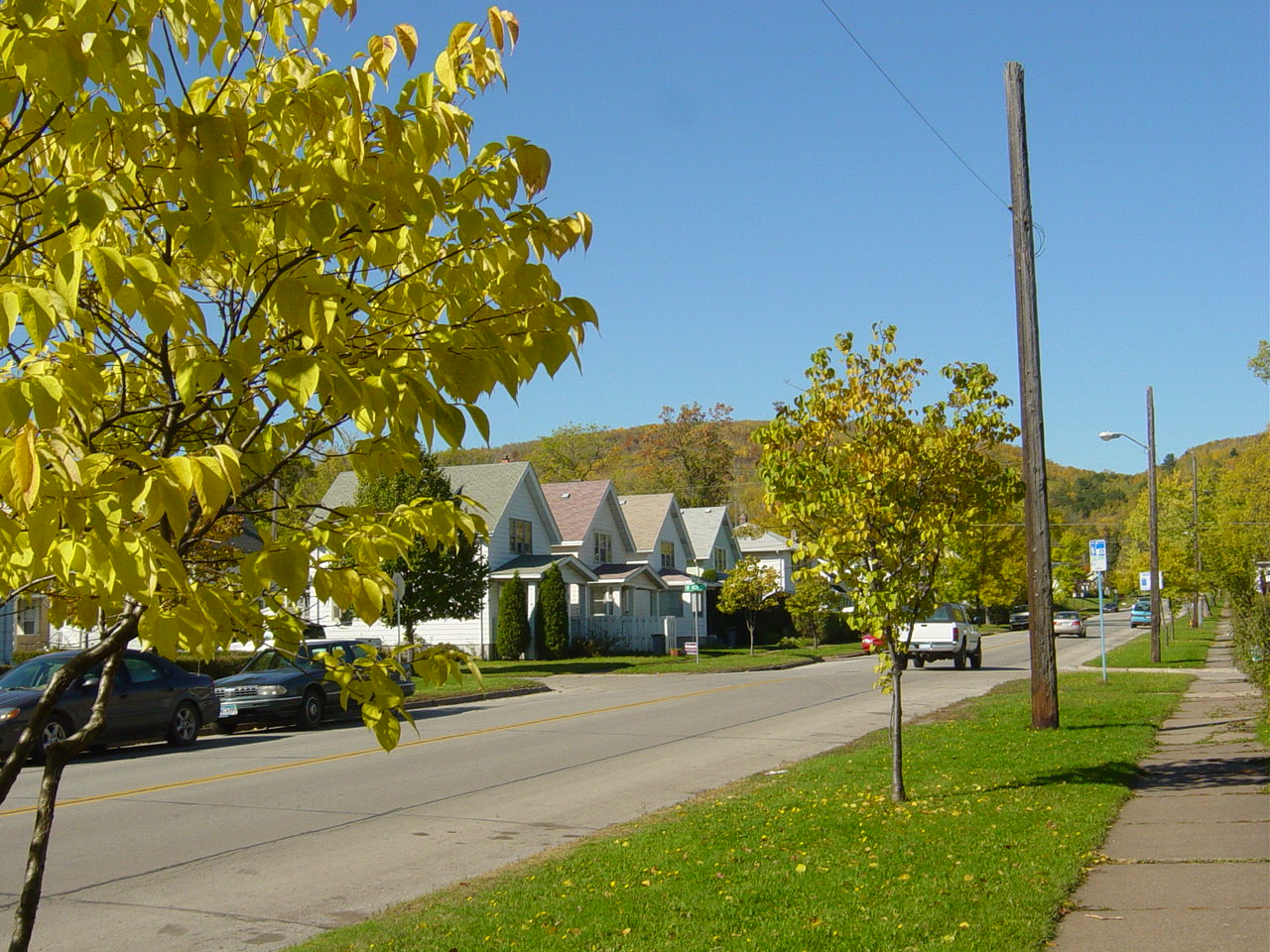
Duluth is one of the few cities left in the upper Midwest where a first purchase is genuinely achievable on an ordinary income. Entry prices start around $165,000 and the housing has character rather than beige vinyl.
The catch is that the purchase price is the smaller half of the decision. This is a city with 90.2 inches of average annual snowfall (NWS Duluth, 1991 to 2020 normals), a housing stock that mostly predates 1940, and a hillside that turns a cheap house into an expensive commute. The cheapest house to buy here is frequently not the cheapest house to own, and no other list will tell you that.
So: eight places worth your time, with the cost-to-own note attached to each.
1. Lincoln Park
Median around $165,000. The lowest entry price in the written Duluth set, and the strongest appreciation story, because the Craft District has turned West Superior Street into the city's most-changed commercial strip: Bent Paddle Brewing, OMC Smokehouse, Duluth Grill, cideries, and a steady stream of new tenants.
Cost to own: old stock, so budget the full inspection list. Buy on the specific house and the specific block rather than on the neighborhood narrative, because a changing neighborhood changes unevenly.
2. Denfeld
Median around $200,000. West Duluth's residential core, walkable by Duluth standards, with the high school, Wade Stadium and a real commercial street nearby. Solid, unglamorous, and the kind of place where the entry price and the amenity level are actually in proportion.
Cost to own: pre-1940 stock on most blocks. Same list.
3. Superior, Wisconsin
Citywide median around $200,000. Across the bridge, roughly $100,000 below Duluth's median, and the ground is flat, which is worth more in February than in June. Central Park near $249,900 and Billings Park near $234,950 are the more established options; the North End and South Superior sit lower.
Cost to own: a different state. Sales tax is lower (5.5% against Duluth's 8.875%), but Wisconsin taxes clothing where Minnesota exempts it, and property tax structures differ. Pull the actual tax bill rather than comparing rates.
4. Bayview Heights
Median around $236,000. A Duluth address with Proctor schools, on larger and more wooded lots than the platted grid below. Homes go pending in about 32 days and sell around 1% under list, which means you can negotiate, an experience unavailable on the east side.
Cost to own: it sits at roughly 1,200 feet. More snow, colder nights, longer power outages, and a climb home. Some outer parcels are on well and septic, so budget an inspection and a water test.
5. Spirit Valley
West Duluth's main street district, with the closest thing to walkable errands in this price band: grocery, pharmacy and hardware on one strip. For a first purchase where you would rather not drive for everything, that is worth real money.
6. Morgan Park
The 1913 US Steel company town, built almost entirely of concrete block, on level river-terrace ground. Among the cheapest housing in the city with genuine architectural interest, and unusually easy winters because there are no grades.
Cost to own: concrete block is different to repair, retrofit and insulate, and you want a contractor who has worked on it. Get quotes before closing, not after. The adjacent former steel plant site and its remediation history belong on your due diligence list.
7. East End and Endion
Median around $258,000. The cheapest way onto the east side, with older lake-view stock, a walkable feel and the Lakewalk below. If the east side is where you want to be and Congdon Park is a fantasy at $645,000, this is the realistic version.
Cost to own: steep streets and old houses. The two most expensive words in Duluth real estate are "hillside basement."
8. Proctor
Its own school district, a walkable small-town main street, and prices below Duluth's median with a shorter run to Miller Hill and the airport than most of Duluth manages.
The part other lists skip: cost to own
Four numbers decide whether a cheap Duluth house stays cheap.
Heating. The single largest variable, and the one newcomers underestimate most. An uninsulated 1915 house and a retrofitted one of the same size are different financial propositions entirely. Do not accept an estimate: request two or three full seasons of actual utility history for the specific address.
The inspection list. Pre-1940 stock in this city reliably produces some combination of knob-and-tube remnants, undersized electrical service, galvanized supply lines, lead paint, ice-dam history and basement moisture on downhill lots. Radon testing is routine here because of the bedrock. None of it is disqualifying and all of it is budgetable, but only if you price it before you offer.
The hill. A ten-minute commute in September is not a ten-minute commute in February if it climbs an avenue that typically gets plowed after the main routes. Drive the actual route uphill in winter conditions before you decide, and ask the city which clearing priority that street is on. Flat ground, in Morgan Park, Superior or parts of the west end, is an underrated financial feature.
Tenure and rental share. Some of the lowest-priced blocks in the region carry high rental shares, which affects both the feel of a street and your eventual resale pool. The ACS tenure figures on each neighborhood page are tract-level and imperfect, but they are honest about which way a neighborhood leans.
Where we would actually start
If you want maximum upside and can handle an old house: Lincoln Park.
If you want the lowest total cost of ownership rather than the lowest price: Superior or Morgan Park, because flat ground and cheap entry compound in your favor every winter.
If you want a first house you will not outgrow in three years: Denfeld or Bayview Heights.
And if the east side is non-negotiable: East End and Endion, and accept that you are buying the location and inheriting the maintenance.
For the structured versions of the two choices this article keeps circling, see East Duluth vs West Duluth and Duluth vs Superior.