Hunter's Park, Duluth, Minnesota
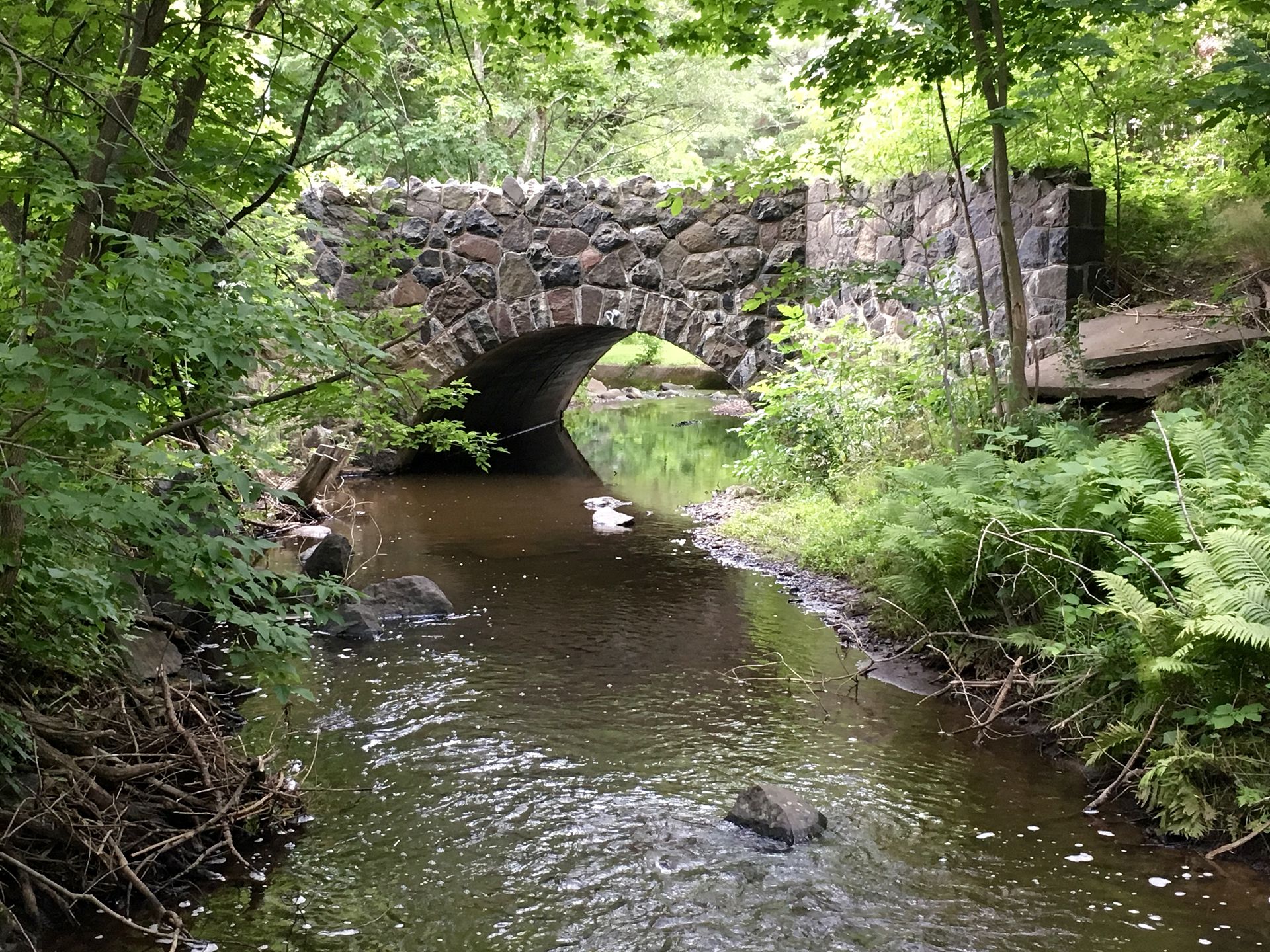
Turrets, curving streets, and Hartley Park at the end of the block.
Hunter's Park is Duluth's woodland neighborhood: curving streets of turreted Queen Annes and Tudor houses laid out as a streetcar suburb in the 1890s, with 660-acre Hartley Park at one edge and the Bagley Nature Area at the other. It sits above the hill, so there are no lake views and the winter runs long. What you get instead is more land, more trees, and more architecture per dollar than anywhere else on the east side.
Everything about Hunter's Park
Each part of the Hunter's Park guide has its own page. Start anywhere.
Hunter's Park occupies the plateau behind the crest of the hill in east Duluth, centered on Woodland Avenue with Arrowhead Road across the top and Hartley Park filling the northern edge. It is one of the city's oldest planned residential areas outside the original downtown grid, and it still reads that way: streets that curve ...
HistoryHunter's Park exists because of the streetcar. Track reached Woodland and Hunter's Park in the mid-1880s, connecting ground that had been too far from downtown to be practical residential land, and the plats followed. The neighborhood was first platted in 1891 and established as a recognized neighborhood by 1897, named for John Hunter and Ronald ...
CharacterHunter's Park feels like a wood with houses in it. The tree canopy is heavy enough that in summer you lose sight of most of the neighborhood from any given street, and the curving layout means you rarely see far ahead. Traffic collects on Woodland Avenue and Arrowhead Road and largely stays there; the interior ...
Who lives hereHunter's Park reads as an established-household neighborhood with a strong professional and academic component. The two most visible groups are families with school-age children, drawn by Hartley and the Homecroft-to-Duluth East pathway, and long-tenured owners who bought decades ago and stayed through retirement.
HousingHunter's Park has the widest architectural range of any Duluth neighborhood, and that is both its appeal and the reason its price data is so hard to read. The historic core, platted from 1891, is Queen Anne and Shingle style: towers, turrets, projecting and wraparound porches, complicated rooflines. Tudor Revival, Colonial Revival, and Craftsman fill ...
SchoolsHunter's Park sits in Duluth Public Schools (ISD 709). The usual pathway is Homecroft Elementary, then Ordean East Middle School, then Duluth East High School. Attendance boundaries change between years, so confirm the assignment for your specific address with the district rather than relying on a neighborhood-level statement.
Parks & recreationThis is the strongest nature access of any neighborhood in this guide that is not on the water. Hartley Park, roughly 660 acres of woods, ponds, rock outcrops, and trail, begins at the neighborhood's northern edge (City of Duluth, accessed 2026-08-13). The Hartley Nature Center at the Woodland Avenue trailhead runs environmental education, camps, and ...
Restaurants & diningHunter's Park has no restaurants of its own, and unlike Congdon Park it does not have a walkable strip a few minutes away either. This is the trade for living above the hill in a purely residential district: dining means getting in the car and deciding which direction.
Churches & worshipHunter's Park is unusually well positioned for driving. Miller Hill, where the big-box retail and much of the medical office space sits, is about eight minutes, which is faster than from any shoreline neighborhood. Downtown is about ten, the airport twelve, and Superior around eighteen. Woodland Avenue and Arrowhead Road are the arterials, with Rice ...
Safety & feelHunter's Park reads as a very quiet, low-traffic residential neighborhood with almost no through movement once you are off Woodland Avenue. Lighting is sparser than in the grid neighborhoods, which is normal for wooded streets laid out before street lighting was standard, and the trailheads carry steady daytime activity.
Daily lifeErrands are a short drive rather than a walk. The Kenwood Shopping Center, about a mile and a half west, is the nearest full grocery and covers pharmacy and everyday retail; Mount Royal is a similar distance downhill and covers the same ground. Neither is walkable from most of the neighborhood in winter.
Local loreThe neighborhood is a merger. Hunter's Park swallowed Waverly Park, Kenilworth Park, and Glen Avon, and locals still use the old names for particular pockets even though no map does. The Glen Avon rink sits on the old Hunter's Field, ground that has carried neighborhood athletics for more than 125 years without a break. Before ...
Is it right for you?You will love Hunter's Park if you want woods rather than water. This is the Duluth address where 660 acres of protected forest starts at the end of your block, where the houses have towers and porches and real lots, and where you can be at a trailhead, a university, or the Miller Hill shops ...
How Hunter's Park scores
Is Hunter's Park right for you?
You'll love it if
- Hartley Park, 660 acres of it, effectively functions as the neighborhood's back yard, with the Bagley Nature Area as a second option.
- The most architecturally varied housing stock in Duluth: Queen Anne turrets and porches, Shingle style, Tudor, and Craftsman on the same street.
- Large wooded lots on curving streets, with more land per house than Congdon at a lower price.
- Central for commuting: about eight minutes to Miller Hill, ten to downtown, and close to both universities.
- Feeds the same Ordean East and Duluth East pathway as the pricier shoreline neighborhoods.
Look elsewhere if
- Essentially no lake views and no lake access. If the water is why you are moving to Duluth, this is the wrong side of the hill.
- Above the hill means more snow and a longer winter than the shoreline neighborhoods, and the plateau holds it.
- Very little walkable commerce. There is no business block, and groceries are a drive.
- Century-old houses on wooded lots carry a real maintenance and tree-risk budget.
- Published price data disagrees wildly here, from $275,000 to $443,000 depending on the source, which makes pricing a specific house genuinely harder.
If you like Hunter's Park, also look at
Directly north along the same corridor, sharing Homecroft, Hartley, and the streetcar-suburb origin.
Congdon ParkDownhill to the southeast, a similar era of architecture with lake proximity and a much higher price.
KenwoodWest across the hill, newer housing and the nearest full grocery.
Chester ParkDownhill to the southwest, closer to campus and the Chester Creek gorge.
LakesideFifteen minutes east on the shoreline, with a walkable business block Hunter's Park lacks.
Hunter's Park head to head
Common questions about Hunter's Park
How much do homes cost in Hunter's Park?
The sources disagree sharply. Redfin's mid-2026 median sale price was about $275,000 at $197 per square foot, while NeighborhoodScout put the neighborhood median at $443,330 in January 2026. Redfin measures recent sales, NeighborhoodScout values the whole housing stock, and the neighborhood spans small cottages to estates. Treat the $275,000 to $443,000 band as the honest picture.
What schools serve Hunter's Park?
Duluth Public Schools (ISD 709): typically Homecroft Elementary at 4784 Howard Gnesen Road, then Ordean East Middle, then Duluth East High School. Boundaries change, so confirm your address with the district. Marshall School on Rice Lake Road is the nearest private option.
Why is Hunter's Park called that?
It was named for John Hunter and Ronald Hunter, and first platted in 1891. It grew as a streetcar suburb after track reached Woodland and Hunter's Park in the mid-1880s, and over time it absorbed the smaller plats of Waverly Park, Kenilworth Park, and Glen Avon, whose names survive on streets and on the church.
Does Hunter's Park have lake views?
Almost none. It sits above the hill on the plateau behind the crest, so the trade is woods instead of water: Hartley Park's 660 acres at one edge and the Bagley Nature Area at the other. Buyers who want a lake view should look at Congdon Park or the shoreline neighborhoods.
Is Hunter's Park walkable?
Not for errands. There is no business block and groceries are a drive to Kenwood or Mount Royal. It is highly walkable for recreation, with trailheads at the end of many streets.
What is the winter like above the hill?
Longer than on the shoreline. Duluth averages about 90 inches a season on the 1991 to 2020 normals (NWS Duluth), and the plateau holds snow after the lake-moderated shoreline blocks have cleared. The upside is that the ski trails at Hartley are minutes away and reliably covered.
Know Hunter's Park well?
Live here, grew up here, or just know it better than we do? Tell us what we're missing, a place we should cover, or something we got wrong.
Where these facts come from
- Redfin, Hunters Park neighborhood housing market accessed 2026-08-13
- NeighborhoodScout, Hunters Park (median $443,330, January 2026) accessed 2026-08-13
- Redfin, Duluth MN housing market (citywide) accessed 2026-08-13
- Wikipedia, Hunter's Park (Duluth), for platting date and naming accessed 2026-08-13
- Zenith City Press, Hunters Park accessed 2026-08-13
- Destination Duluth, Hunters Park neighborhood profile accessed 2026-08-13
- UMD Statesman, Remembering the Woodland streetcar line accessed 2026-08-13
- City of Duluth, Hartley Park accessed 2026-08-13
- NCES Common Core of Data, Homecroft Elementary (271104000466) accessed 2026-08-13
- NWS Duluth, seasonal snowfall records and normals accessed 2026-08-13
- Duluth Police Department 2025 Annual Report accessed 2026-08-13
Last reviewed 2026-08-13 by Guide editorial.