North End (Superior), Wisconsin
Superior's working waterfront neighborhood, and the address the brewery scene chose.
The North End is Superior's working waterfront neighborhood: small houses built dense for people who walked to the docks, industrial parcels next door, and the lowest home prices in the Twin Ports. It is also, unexpectedly, where the region's most interesting brewery and music district landed. You buy here for the price and the energy, and you accept the trains, the trucks, and the foghorn.
Everything about North End (Superior)
Each part of the North End (Superior) guide has its own page. Start anywhere.
The North End sits north of downtown Superior toward the harbor, on flat bay-flat ground barely above the water. It is not a tidy district with clean edges. Residential blocks interleave with terminals, rail corridors, tank farms, and warehouses in a pattern no modern zoning map would allow, and that mixture is the entire character ...
HistoryThe North End is the neighborhood Superior's port built, and it was for a long time the busiest part of the city. Development here followed the industrial waterfront: as docks, grain elevators, rail yards, and shipyards went up along the harbor through the 1890s and early 1900s, housing filled in immediately behind them, tightly platted ...
CharacterThe North End feels unpolished and alive, which is a rarer combination than it sounds. Blocks of small houses give way abruptly to a rail spur or a terminal fence, then pick up again. Trucks move through. There is nothing decorative about the layout, because nothing about it was designed to be looked at.
Who lives hereThe North End's household mix skews toward renters and small households, with an ownership share below Central Park's or Billings Park's, which follows directly from a housing stock heavy in small cottages, duplexes, and upper-lower conversions.
HousingThe North End has the smallest, oldest, and cheapest housing stock in Superior, and it is the market where a buyer's inspection matters most.
SchoolsThe North End is served by the School District of Superior, which enrolled 3,732 students as of its September 2025 count across five elementaries, a preschool, one middle school, and one high school (School District of Superior, accessed 2026-08-13). Elementary assignment depends on address across Northern Lights, Cooper, Great Lakes, Bryant, and Four Corners, all ...
Parks & recreationThe North End is the thinnest neighborhood in Superior for parks, and that is a real gap rather than an oversight in this guide. The land here went to industry, and there is no significant green space with facilities inside the district.
Restaurants & diningThe North End punches far above its weight, and it is the only residential neighborhood in Superior where the dining and drinking are inside the neighborhood rather than a drive away.
Churches & worshipThe North End is well placed for driving and better than most of the region for walking, with a caveat about the traffic mix.
Safety & feelThe North End reads as a dense, flat, mixed industrial and residential neighborhood with continuous sidewalks on the residential blocks, an active daytime working presence, and a concentrated evening scene at the top of Tower Avenue. Lighting and street condition vary noticeably between blocks, and the interleaving of industrial parcels means some stretches have little ...
Daily lifeDaily life in the North End is a mix of very close and moderately far. Corner stores, taverns, and gas are near. Downtown, five minutes south, covers banking, the post office, the Superior Public Library, and the Douglas County and city offices, which is where a new arrival from Minnesota handles Wisconsin licensing, registration, and ...
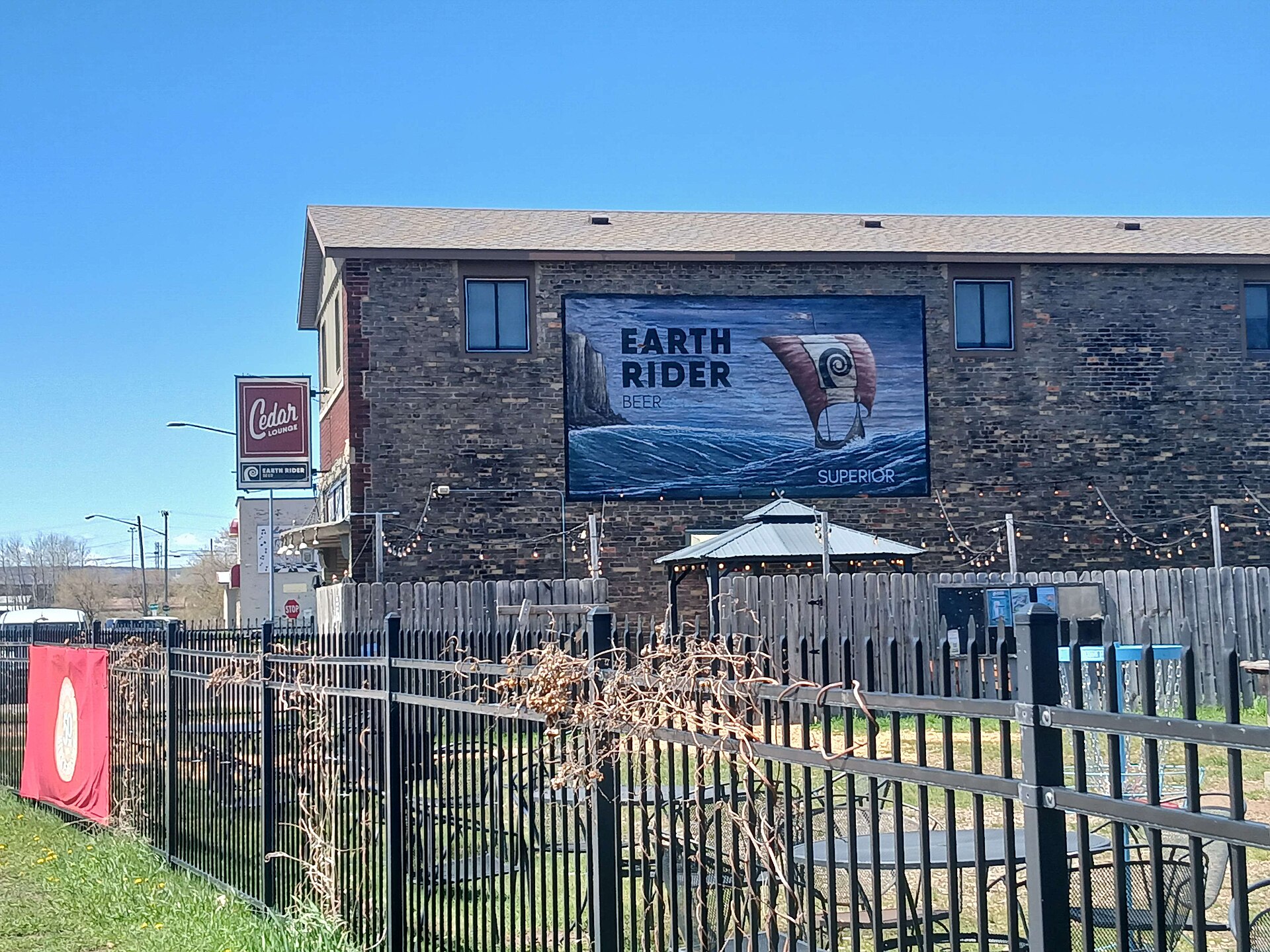
Local loreThe Anchor Bar started as a longshoremen's bar. Before it became the most-recommended burger in the Twin Ports, it was where the dock workers of the north end drank, and food did not arrive on the menu until the early 1980s. The Cedar Lounge has been a tavern since 1912, when it went up for ...
Is it right for you?You will love the North End if you want the cheapest way into a house in this metro, if you would rather have a taproom four blocks away than a quiet street, and if the sound of a working port reads to you as character rather than nuisance. It suits first-time buyers who are handy, ...
How North End (Superior) scores
Is North End (Superior) right for you?
You'll love it if
- The lowest entry price in the Twin Ports. Small houses and duplexes here trade well below Superior's citywide median of about $214,000, which is itself well below Duluth's.
- The brewery and music district is inside the neighborhood, not a drive away. Earth Rider, the Cedar Lounge, and Thirsty Pagan are all here or a block off.
- Five minutes to downtown, twelve to downtown Duluth, and immediate access to US 2, US 53, and the Blatnik Bridge.
- Flat, dense, gridded, and genuinely walkable, with alleys and sidewalks on most blocks.
- Strong rental demand and low acquisition cost make this the most active small-investor market in the metro.
- Real industrial-reuse momentum. The Leamon Mercantile warehouse becoming Earth Rider is a completed project, not a proposal.
Look elsewhere if
- Noise is the defining condition: rail, port, trucks, and weekend bars. This is not a quiet place to live and no amount of renovation changes that.
- Housing is old, small, and has often been rented for decades. Deferred maintenance is the norm rather than the exception.
- High water table on the bay flats. Wet basements, drain tile, and sump performance are the first things to check on every house here.
- Industrial parcels sit next to residential ones. For any property adjacent to a current or former industrial use, ask about soil and prior site history.
- Fewest amenities for families: no neighborhood park with real facilities, no school inside the district, and a mile and a half to a full grocery.
- Values here have appreciated the least in a city that has appreciated slowly. Buy for cash flow or for the house, not for the resale.
If you like North End (Superior), also look at
Immediately south, sharing the Tower Avenue brewery district and the same 1890s commercial stock.
Central Park (Superior)East, the city's historic residential district: quieter streets, bigger lots, higher prices.
Billings Park (Superior)West along the river, a quieter residential neighborhood with the city's best riverfront park.
South End (South Superior)South along Tower Avenue, more postwar housing and a quieter setting at a similar price.
Allouez-Itasca (Superior)East along the bay, the other industrial-adjacent neighborhood, anchored by the ore docks.
SuperiorThe city overview page, with the full market, schools, and MN versus WI tax picture.
Recent coverage of North End (Superior)
City councilors laid out spending priorities for next year, including streets, recreation and transit.
Related: Downtown Superior South End (South Superior) Central Park (Superior) Billings Park (Superior) East End (Superior) Allouez-Itasca (Superior)
The utility began building a bill-assistance program for qualifying households as lead service line work continues.
Related: Downtown Superior South End (South Superior) Central Park (Superior) Billings Park (Superior) East End (Superior) Allouez-Itasca (Superior)
Bids for the new station's solar installation came in below the city's estimate.
Work started on the neighborhood's replacement fire station, with completion expected the following summer.
Construction bids came in above the borrowed amount, leaving the city roughly $800,000 short.
A revised design for the station moved ahead at the commission level.
The council signed off on agreements to extend fiber internet into the neighborhood.
Headlines link to the original publisher. We summarise and attribute, we do not republish. Last checked 14 Aug 2026.
Common questions about North End (Superior)
Why is the North End so cheap?
Three reasons, all structural. The housing is small, old, and was built dense for people who walked to work at the docks. Much of it has been rented for decades, so deferred maintenance is common. And the neighborhood sits in among the port, the rail corridors, and the industrial waterfront, which means noise and truck traffic that no renovation can fix. Small houses and duplexes here trade well below Superior's citywide median of about $214,000 (Redfin, July 2026), which is itself well below Duluth's.
How bad is the noise in the North End?
Genuinely significant, and it varies enormously block to block. Expect train horns and rail yard operations, truck traffic serving the port, ship and tug sound, terminal and tank farm activity, and the Superior Entry foghorn in fog, plus bar noise near the north end of Tower on weekend nights. This is the one thing about the neighborhood you must check yourself: stand on the specific street at a weekday morning, a weekday evening, and a Saturday night before making an offer.
Is the North End a good investment?
It is the most active small-investor market in the metro, and for defensible reasons: the lowest acquisition cost in the Twin Ports, a meaningful duplex and small-multifamily stock, and steady rental demand from a working port city with a university. The honest counterweights are that appreciation here has been the weakest in a city that has lagged Duluth for decades, and that the old, long-rented stock hides real capital expense. Underwrite it as cash flow with a serious repair reserve, not as an appreciation play.
What is the brewery district?
The upper end of Tower Avenue and the blocks around it. Earth Rider Brewery occupies roughly 16,000 square feet of the former Leamon Mercantile warehouse at 1617 North 3rd Street, with outdoor festival grounds, and its taproom is the Cedar Lounge, a building put up in 1912 for the Northern Brewing Company and billed as the longest continually operating tavern in the Twin Ports. Thirsty Pagan Brewing is a block east at 1615 Winter Street in the 1908 Soo Line Freight Depot. Together they have made the North End a destination people cross the bridge for.
What should I check before buying in the North End?
The basement first. This is flat bay-flat ground with a high water table, so wet basements, failed or absent drain tile, and sump performance are the most common expensive findings. Then the standard pre-1940 list: knob-and-tube remnants, undersized electrical service, asbestos siding and pipe wrap, lead paint, and an aging sewer lateral worth scoping. For any property next to a current or former industrial parcel, ask about site history and soil. And ask how long the house has been a rental, because that predicts the maintenance backlog better than the age does.
Is the North End walkable?
The street grid is, yes: flat, dense, gridded, with sidewalks and alleys on most blocks, and the brewery district is genuinely walkable from much of the neighborhood. What is not walkable is the practical stuff. There is no full grocery, no pharmacy, and no school inside the neighborhood, and the Belknap corridor is about a mile and a half south. Most households here keep a car.
Know North End (Superior) well?
Live here, grew up here, or just know it better than we do? Tell us what we're missing, a place we should cover, or something we got wrong.
Where these facts come from
- NWS Duluth, seasonal snowfall records and normals accessed 2026-08-14
- Redfin, Superior WI housing market accessed 2026-08-13
- Duluth News Tribune, Our Neighborhoods: Neighborhoods shape Superior (North End history and settlement) accessed 2026-08-13
- InWisconsin, state grant for downtown Superior redevelopment (Earth Rider, former Leamon Mercantile warehouse). The article soft-404s: inwisconsin.com now redirects to the WEDC homepage rather than this post, so the URL is not carried. accessed 2026-08-13
- Earth Rider Brewery, taproom and Cedar Lounge accessed 2026-08-13
- Anchor Bar and Grill, Superior (history as a longshoremen's bar on the north end) accessed 2026-08-13
- City of Superior, History of Superior accessed 2026-08-13
- School District of Superior, District Profile accessed 2026-08-13
- NCES Common Core of Data, school list for Superior School District accessed 2026-08-13
- Wisconsin Department of Revenue, Lottery and Gaming Credit program accessed 2026-08-13
- Duluth Transit Authority, routes and schedules accessed 2026-08-13
- USGS Elevation Point Query Service, spot elevations at verified geocoded points accessed 2026-08-14
Last reviewed 2026-08-13 by Guide editorial.